How to Register Your Dog in Motley County, Texas
If you’re searching for how to register my dog in Motley County, Texas, the most important thing to know is that Texas does not run a single statewide “dog registration” program for everyday pets. Instead, most requirements are handled locally—typically through a city office, the county sheriff’s office, and/or local rabies enforcement practices. That means the right place for a dog license in Motley County, Texas can depend on where you live (inside Matador town limits vs. unincorporated areas) and what you need the registration for (proof of rabies, a local tag, resolving a citation, etc.).
Important: “Dog Registration” Often Means Rabies Compliance + Local Licensing
In many Texas communities, what residents call “registering a dog” is a combination of (1) keeping your dog currently vaccinated for rabies and (2) following local licensing, leash, and nuisance rules. If you were told to get an animal control dog license Motley County, Texas, start by calling the local offices below and asking which office issues tags (if any) for your address.
Where to Register or License Your Dog in Motley County, Texas
Because licensing is often handled at the county or city level, here are example official offices within Motley County, Texas that residents commonly contact for animal-related enforcement questions, local ordinances, and rabies bite reporting. If you are unsure where to register a dog in Motley County, Texas, contact the city first (if you live in town), then the county sheriff.
Official Offices (Motley County, Texas)
| Office | Contact & Address | Hours |
|---|---|---|
City of Matador (City Hall)For city ordinances, local tags (if issued), nuisance/leash issues inside city limits
|
Address: 706 Dundee Ave, Matador, TX 79244
Phone: (806) 347-2255
Email: city.of.matador@gmail.com
|
Mon–Thu: 8:00 AM–12:00 PM, 1:00 PM–5:00 PM
Fri: 8:00 AM–12:00 PM
|
Motley County Sheriff’s Office (Motley County Courthouse)For county-level enforcement, animal calls outside city limits, and guidance on rabies/bite reporting
|
Location: Motley County Courthouse, 701 Dundee Ave, Matador, TX 79244
Mailing: P.O. Box 715, Matador, TX 79244
Phone: (806) 347-2621
Telephone (alternate): (806) 347-2234
Fax: (806) 347-2692
|
Office hours not listed publicly on the referenced county page.
|
Motley County Tax Assessor-CollectorNot typically the issuing office for pet licenses, but a useful county contact point if you’re directed to the courthouse for local processes
|
Physical: 701 Dundee, Matador, TX 79244
Mailing: P.O. Box 727, Matador, TX 79244
Phone: (806) 347-2252
Fax: (806) 347-2220
Email: motleycotac@gmail.com
|
Office hours not listed in the referenced directory entry.
|
Texas DSHS (Public Health Region) – Motley County Disease Reporting ContactFor public health coordination and disease reporting questions (including rabies-related public health processes)
|
Email: Kevin.McClaran@dshs.texas.gov
Street address/phone not listed on the referenced disease reporting contact page.
|
Office hours not listed on the referenced page.
|
Overview of Dog Licensing in Motley County, Texas
Is a Dog License Required Everywhere in Motley County?
Requirements vary across Texas because cities and counties can set local rules for animal control, including whether a dog must have a city-issued tag or “license.” In very rural counties, the practical focus is often on rabies vaccination compliance, bite reporting, and nuisance enforcement rather than a formal countywide licensing system.
For residents asking about a dog license in Motley County, Texas, the most reliable approach is to confirm whether:
- You live inside Matador (city rules may apply), or
- You live in the unincorporated county (county enforcement practices may apply).
Rabies Vaccination Is the Non-Negotiable Requirement
Even where a formal tag is not issued, Texas law requires rabies vaccination for dogs and cats, and veterinarians must issue a rabies vaccination certificate when they vaccinate. Keeping a current rabies certificate is often the single most important document for “registration” purposes (boarding, grooming, housing, resolving a complaint, and showing compliance after an incident).
How Dog Licensing Works Locally in Motley County, Texas
Step 1: Confirm Which Local Rules Apply to Your Address
The first step in how to register my dog in Motley County, Texas is confirming whether your residence is governed by city ordinances (Matador) or by county enforcement practices. If you are within Matador city limits, start with City Hall. If you are outside city limits, the Motley County Sheriff’s Office is a common starting point for guidance on complaints, stray animals, and enforcement.
Step 2: Keep Your Dog’s Rabies Vaccination Current
Rabies rules are enforced through public health and local authorities. Your veterinarian should provide a rabies vaccination certificate showing the vaccination date and product information. Keep a copy in your home records and consider keeping a photo of it on your phone for quick access.
What “Current Rabies Vaccination” Usually Means
- Dogs should receive rabies vaccination according to Texas requirements and the vaccine’s labeled booster interval.
- Proof is typically the veterinarian-issued certificate (and sometimes a rabies tag, depending on the clinic).
- Local rules can add procedures (for example, how to handle bites, quarantines, or proof deadlines).
Step 3: Ask Whether a Local Tag/License Is Issued (and How to Obtain It)
If Matador (or Motley County) issues a local pet license/tag, the office will usually tell you:
- Which form (if any) to complete
- Whether licensing is handled in person, by phone, or by mail
- What proof is required (rabies certificate, ID, residency)
- What the fee is and how to pay
If no formal licensing system exists, you can still “register” your dog in a practical sense by maintaining rabies documentation, microchip information (optional but strongly recommended), and compliance with local leash/nuisance rules.
Step 4: Understand Bite Reporting and Quarantine Procedures
If a dog bites a person (or potentially exposes someone), Texas public health guidance often involves reporting, verifying vaccination status, and an observation/quarantine process. These procedures are typically coordinated locally (city/county) with public health oversight. If an incident occurs, contact your local office right away and follow all written instructions.
Common Reasons People Need “Dog Registration” Proof
- New move-in requirements with a landlord
- School or youth activity event rules (dogs on campus/event grounds)
- Travel or boarding/grooming requirements
- After a complaint about roaming dogs, barking, or livestock harassment
- After an animal bite report
Service Dog Laws in Motley County, Texas
A Service Dog Is Not the Same as a Dog License
A dog license in Motley County, Texas (when offered locally) is an administrative or compliance step tied to local ordinances and rabies enforcement. A service dog, by contrast, is defined by disability law and training to perform specific tasks for a person with a disability.
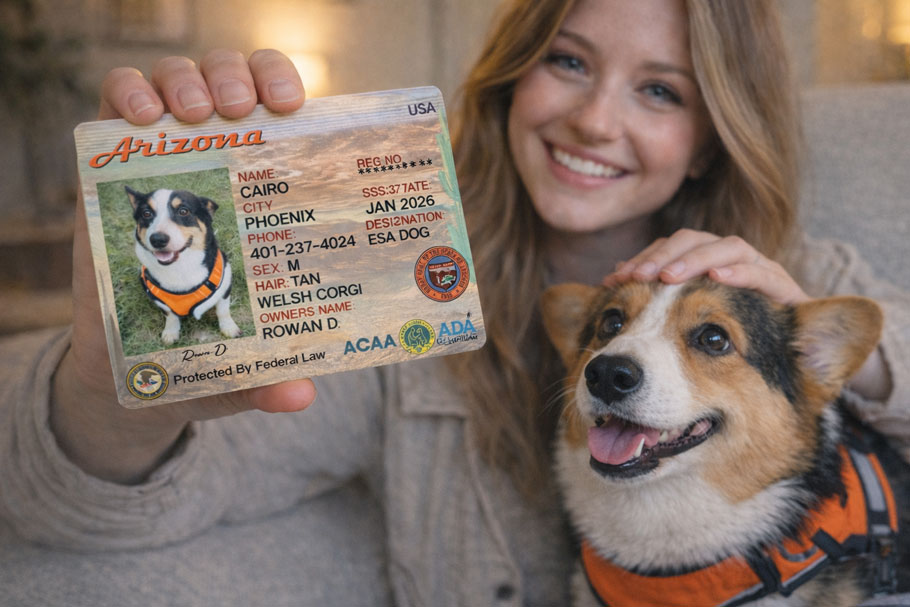
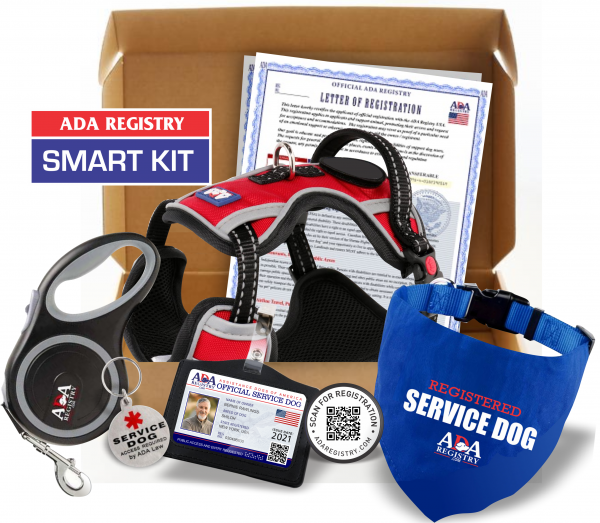
No Official “Service Dog Registration” Is Required for Public Access
Under disability law, service animals are generally not required to be registered with a state database or wear a special “license” to have rights in public accommodations. Be cautious of any claim that you must buy a card, certificate, or online registration to make a dog a service animal.
What Businesses May Ask (General Guidance)
In many situations, staff may ask limited questions to determine whether a dog is a service animal (for example, whether the dog is required because of a disability and what work or task it has been trained to perform). They generally cannot demand medical details. Regardless of status, handlers must keep the dog under control and the dog must be housebroken.
Emotional Support Animal Rules in Motley County, Texas
Emotional Support Animals (ESAs) Are Different from Service Dogs
An emotional support animal may help a person with a mental or emotional condition, but ESAs are not automatically treated as service animals for public access purposes. That means an ESA generally does not have the same right to enter restaurants, stores, or other public places where pets are not allowed.
ESAs and Housing
ESA accommodations most commonly arise in housing contexts. Housing providers may request reliable documentation consistent with fair housing rules, and they may have processes for requesting an accommodation. Even then, the animal must not create a direct threat or cause substantial property damage, and the resident must follow reasonable rules.
ESAs Do Not Replace Local Rabies or Licensing Rules
Even if your dog is an ESA, you still must follow local animal rules, including leash requirements, nuisance ordinances, and rabies vaccination requirements. An ESA is not an exemption from a local animal control dog license Motley County, Texas requirement if your city or county enforces one.
Frequently Asked Questions
It depends on the local rules that apply to your address. Some places issue local tags/licenses through a city office; other areas focus on rabies compliance and nuisance enforcement without a formal licensing program. If you’re unsure, call Matador City Hall (for city limits) or the Motley County Sheriff’s Office (for county areas) and ask what they require for your location.
- Rabies vaccination certificate (proof of current vaccination)
- Your identification
- Proof of residency (if required by the local office)
- Licensing fee (if the city/county issues a tag/license)
In many rural counties, animal-related calls are handled through local law enforcement and city government rather than a standalone animal services department. For issues inside Matador city limits, start with Matador City Hall. For county areas outside city limits, the Motley County Sheriff’s Office is a common contact point for guidance and enforcement coordination.
A service dog’s legal status is based on training and disability law, not an online “registration” card. However, your dog may still be subject to local requirements that apply to all dogs (like rabies vaccination and leash/nuisance rules). A local dog license/tag—if issued—does not create service dog status.
Generally, no. Emotional support animals usually do not have the same public-access rights as trained service dogs. ESAs are most often relevant in housing situations, and even then, owners must follow reasonable rules and keep the animal under control.
- Confirm whether your address is inside Matador city limits.
- If inside city limits, call Matador City Hall and ask about tags/licensing and required proof.
- If outside city limits, call the Motley County Sheriff’s Office and ask which office handles licensing (if any) and rabies enforcement guidance.
- Have your rabies certificate ready regardless—this is the most commonly requested document.
Disclaimer
Licensing requirements and office locations may change. Residents should verify details with their local animal services office within Motley County, Texas.